
Spanish trains change the geography of the country. Distances that feel like flights are actually two-hour glides. The AVE network radiates from Madrid like spokes — Seville in two and a half hours, Barcelona in two and a half, Valencia in under two. You can cross from the Mediterranean to the Atlantic in a morning. From olive groves to cork forests to the red earth of Andalusia, all through the window.
The stations themselves are part of the experience. Madrid's Atocha has a tropical garden inside — palm trees and turtles under a soaring iron-and-glass canopy. Barcelona Sants is functional but efficient, the trains sliding in and out with quiet precision. Seville's Santa Justa opens onto wide avenues that lead straight into the old city. You step off the train and Spain is already around you.
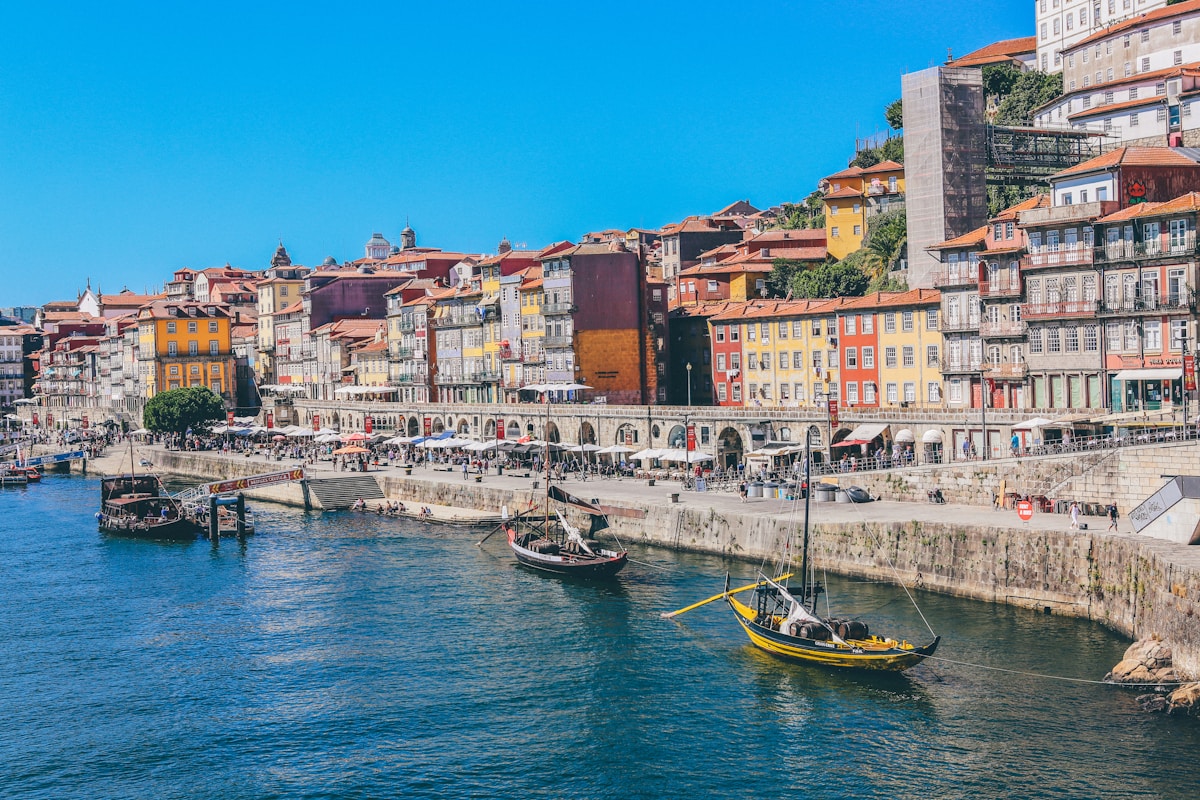
The classic first route.
For seven days and a first visit: Madrid, Seville, Barcelona. Two nights in Madrid — enough for the Prado, the Retiro, and an evening in La Latina. Then the AVE south. Two and a half hours of olive groves and sunflower fields, then Seville. Two nights there — the Alcázar, the cathedral, dinner at nine in Triana. Then the AVE northeast to Barcelona. Three nights — the Gothic Quarter, the Sagrada Familia, the Barceloneta beach at sunset. Three cities, two train rides, zero car rentals.
If you have ten days, add Granada between Seville and Barcelona. The train from Seville to Granada takes about two and a half hours. The Alhambra alone justifies the detour — but book those tickets first, because they sell out weeks ahead. Two nights in Granada, then fly or train to Barcelona. The Alhambra morning slots for late May and June are opening now at the official site.
For two weeks, you can slow down. Add Córdoba between Madrid and Seville — an hour and a half from Madrid, the Mezquita's forest of red-and-white arches worth the stop even for an afternoon. Or continue east from Barcelona toward Valencia, where the Turia riverbed has become one of Europe's great urban parks and the beach is a short tram ride from the city center. The regional trains along the Mediterranean coast are slower but scenic — you'll see the sea between Tarragona and Castellón.
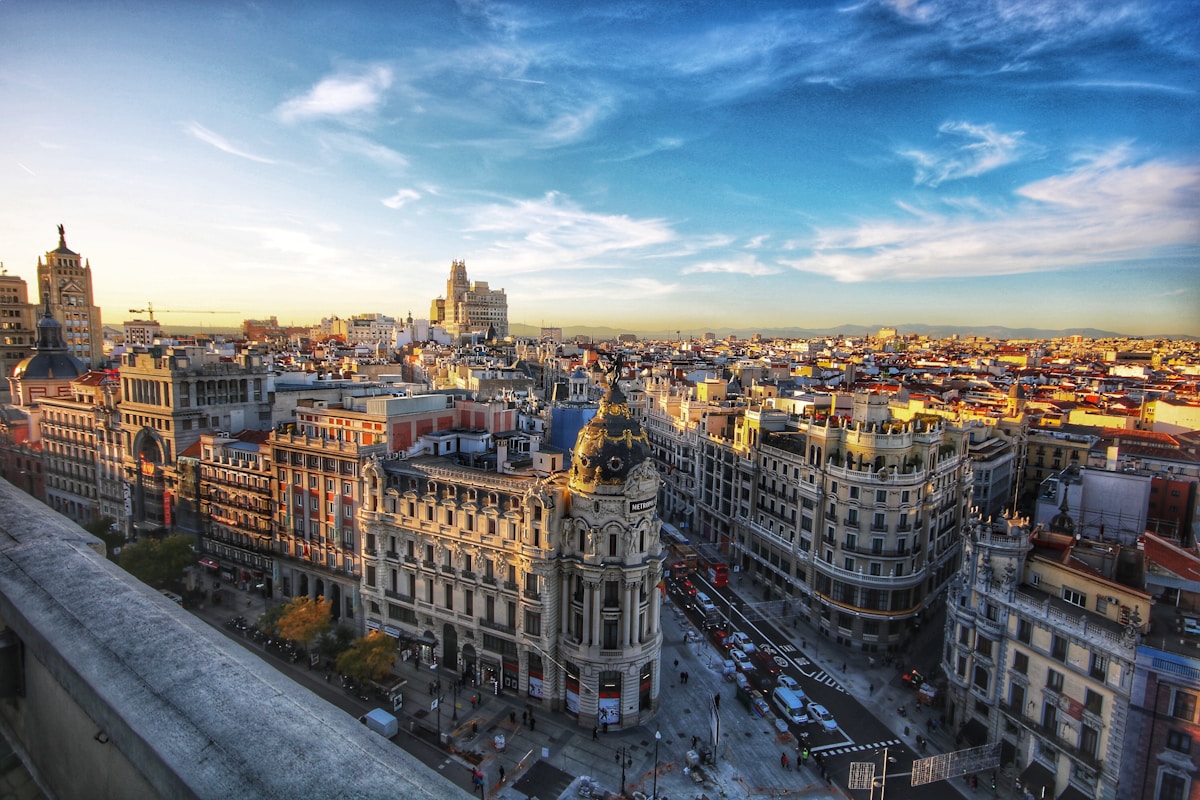
If you're drawn north instead — toward the Atlantic rather than the Mediterranean — there's a different Spain entirely. The train from Madrid to Bilbao takes you into Basque Country: greener, cooler, the light softer. San Sebastián is five hours from Madrid by train, through the mountains of Burgos and into a coastline that feels closer to Brittany than to the Costa del Sol. The pintxos bars in the old town are world-class. Book those trains early — the Bilbao and San Sebastián routes have fewer daily departures than the southern corridor.
What to book, and when.
High-speed AVE tickets rise significantly close to departure. Book one to two weeks ahead for the best prices. Weekend departures — especially Friday afternoons and Sunday evenings — sell out first on the Madrid–Barcelona and Madrid–Seville corridors. Compare across operators: Renfe runs the most routes, but Iryo and Ouigo offer competitive prices on the main corridors. Renfe is the official operator; Trainline compares across all three in one search. Hotels near stations save time on short stays — old-town locations are better when you're settling in for three or four nights.
Regional trains — Media Distancia and Cercanías — are flexible. Buy same-day at the station. They're slower, stop at smaller towns, and give you a different Spain: the one between the cities. Use these for day trips. From Madrid: Toledo in 30 minutes, Segovia in under 30. From Barcelona: Girona in 40 minutes, Sitges in 35. From Seville: Cádiz in an hour and a half, Córdoba in 45 minutes.

What people get wrong. Trying to see all of Spain in one week. The best route leaves energy for the city itself — a café in Seville at 11am is better than a rushed transfer to a fourth destination. Booking hotels without checking station geography — a cheap hotel becomes expensive if every transfer is a taxi ride. Ignoring seasonality — summer heat in inland cities like Seville, Córdoba, and Madrid changes what's realistic between noon and 6pm. Plan indoor activities during those hours from June through September.
And don't forget: Alhambra tickets, Sagrada Familia tower access, and Alcázar entry all sell out in advance. Check official sites first — Alhambra, Sagrada Familia, Alcázar of Seville. If official availability is gone, compare guided tours from reputable operators. Never buy from resellers without checking the official page first — markups on third-party sites can be extreme.
Full advance-booking guide → · What's happening in Spain this month →
Spain This Week
What changed, what to book, what to avoid — every Monday, based on current conditions, not a content calendar.